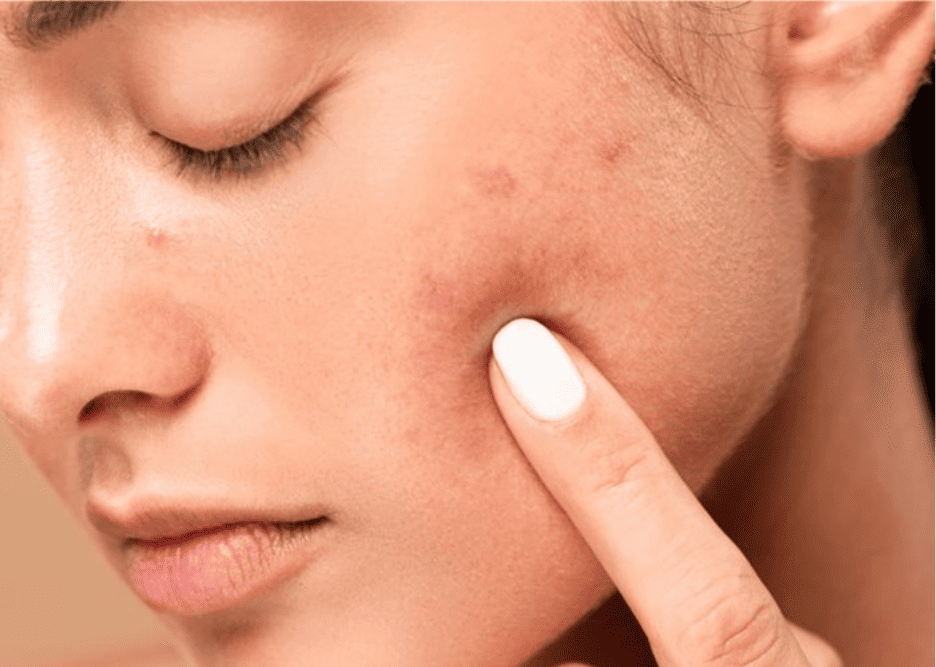
Acne scars do not all form the same way, which is why the treatment that helps one scar type may do very little for another. Ice pick scars are deep and narrow, rolling scars are often tethered beneath the skin, boxcar scars have broader depressions with defined edges, and hypertrophic or keloid scars rise above the skin’s surface.
At Castle Dermatology, acne scar treatment begins by identifying the scar types present, their depth, skin tone, and whether deeper tissue tethering is involved. Because many patients have mixed scar patterns, treatment may combine options such as TCA CROSS, subcision, fractional laser resurfacing, RF microneedling, or injectable scar treatments when appropriate.
Understanding the Main Types of Acne Scars
Atrophic Acne Scars
Atrophic scars form when acne-related inflammation damages collagen and the skin does not fully rebuild its previous structure. Ice pick, rolling, and boxcar scars all fall into this category, but each has a different shape and depth.
That distinction matters because treatment needs to address the structure of the scar, not just the skin’s surface.
Hypertrophic and Keloid Scars
Hypertrophic and keloid scars develop when excess collagen forms during healing. Hypertrophic scars stay within the original area of injury, while keloids extend beyond it.
These raised scars require a different treatment strategy from depressed acne scars and may be treated with intralesional corticosteroid injections, 5-fluorouracil injections, vascular laser treatment, or a combination of approaches.
Post-Inflammatory Hyperpigmentation vs. True Scarring
Not every dark mark left behind after acne is a structural scar. Post-inflammatory hyperpigmentation, or PIH, appears as flat discoloration after a breakout heals and may gradually fade over time.
True acne scars change the contour or structure of the skin. A dermatologist can determine whether treatment should focus on pigmentation, scar depth, or both.
Also Read: Top 5 Treatments Dermatologists Recommend for Acne Scarring
How Different Acne Scar Types Are Treated
Ice Pick Scars: TCA CROSS and Punch Excision
Ice pick scars are deep, narrow depressions that may not respond as well to surface-focused treatments alone.
TCA CROSS is one commonly used option for selected ice pick scars. A dermatologist applies a high concentration of trichloroacetic acid directly inside the scar to create a controlled healing response and stimulate gradual remodeling.
For particularly deep scars, punch excision may also be considered. The individual scar is removed with a small surgical instrument so the area can heal as a smaller, flatter scar.
Rolling Scars: Subcision and Volume RestorationSubcision and Volume Restoration
Rolling scars create broad, shallow depressions that are often pulled downward by fibrous bands beneath the skin.
Subcision addresses the underlying tethering by releasing those fibrous attachments. In selected cases, dermal filler may also be used to restore volume beneath a depression.
Subcision may be combined with resurfacing or RF microneedling when both tethering and surface-texture irregularities are present.
Boxcar Scars: Fractional CO2 Laser and RF Microneedling
Boxcar scars are round or oval depressions with sharper edges than rolling scars.
Fractional CO2 laser resurfacing may help soften those edges and stimulate collagen remodeling. RF microneedling uses fine needles to deliver radiofrequency energy at selected depths in the dermis and may be useful for certain textural concerns.
The better option depends on scar depth, skin type, previous treatment, treatment goals, and tolerance for downtime.
Acne Scar Types and Common Treatment Options
| Scar Type | Typical Features | Treatments That May Be Considered |
|---|---|---|
| Ice Pick | Deep, narrow pits | TCA CROSS, punch excision |
| Rolling | Broad depressions with tethering | Subcision, selected fillers, RF microneedling |
| Boxcar | Round or oval depressions with defined edges | Fractional CO2 laser , RF microneedling |
| Hypertrophic/Keloid | Raised, firm scar tissue | Corticosteroid or 5-FU injections, vascular laser treatment |
Treatment courses vary based on scar severity, skin type, response, and whether several modalities are being combined.
Also Read: How Acne Scar Treatment Can Improve Your Skin
Why Combination Treatment Is Often Used
Many patients have more than one type of acne scar, which is why a single device or procedure may not address everything.
A rolling scar may need subcision to release tethering before resurfacing improves the surface. Ice pick scars may be treated individually with TCA CROSS, while broader boxcar scars may respond better to laser or RF microneedling.
The sequence is individualized according to the patient’s scar pattern and skin.
Treating Acne Scars in Different Skin Tones
Skin tone is an important part of acne scar treatment planning because procedures that create heat or inflammation can also trigger pigmentation changes.
Patients with medium to darker skin tones may have a greater risk of post-inflammatory hyperpigmentation after certain procedures. Treatment selection, energy settings, pre-treatment preparation, sun protection, and aftercare may therefore need to be adjusted.
The goal is not to choose the most aggressive treatment available, but the treatment that appropriately addresses the scar while accounting for how the patient’s skin is likely to heal.
Also Read: Acne Scar Revision: What You Should Know About This Minimally Invasive Procedure
Frequently Asked Questions
Can acne scars be completely removed?
Complete removal is rarely realistic, but treatment can often make scars less noticeable by improving depth, contour, texture, or color. Results vary based on scar type, severity, skin characteristics, and the treatments used.
How many acne scar treatments will I need?
There is no universal number. Some treatments are performed as a series, while others may be used more selectively. Scar type, severity, skin tone, treatment response, and combination therapy all influence the number and spacing of sessions.
What is the difference between microneedling and RF microneedling?
Traditional microneedling creates controlled microscopic injuries in the skin. RF microneedling adds radiofrequency energy at selected depths in the dermis and may be useful for certain deeper textural concerns.
The better option depends on scar type, skin type, goals, and downtime preferences.
Is subcision painful?subcision painful?
Subcision is usually performed with local anesthesia to reduce discomfort. Patients may still feel pressure or pulling, and bruising, swelling, or soreness can occur afterward.
How are ice pick scars treated?
TCA CROSS is one option for selected ice pick scars and involves applying high-concentration trichloroacetic acid directly inside the scar. Punch excision may also be considered for particularly deep scars.
Can different acne scar treatments be combined?
Yes. Many patients have mixed scar patterns, and combination treatment may be appropriate when more than one structural problem is present.
Schedule Your Acne Scar Evaluation at Castle Dermatology
The most important question in acne scar treatment is not simply which procedure is “best,” but which type of scar is present and what is causing its appearance.
A board-certified dermatologist can determine whether your concerns involve ice pick scars, rolling scars, boxcar scars, raised scars, pigmentation, or a combination of several patterns.
Schedule an acne scar consultation with Castle Dermatology in Tarzana to discuss which treatment options may be appropriate for your skin.
This article provides general dermatologic information and is not formal medical advice. Individual diagnoses, treatment recommendations, and acne scar outcomes vary.