Acne scars can be incredibly challenging to treat because they form within the deeper layers of the skin, not just on the surface. This is why many patients feel frustrated after trying single treatments that only offer partial improvement. Over the years, combination therapies have gained popularity because they blend different techniques to address scars from multiple angles.
Fractional CO2 laser resurfacing and dermal fillers are two of the most effective options available today. Each one targets a different component of acne scars, and when used together, they can create smoother, firmer, and more refined skin. This guide will help patients understand how and why these treatments complement each other and what to expect when working with expert providers at Castle Dermatology.
Understanding Acne Scars and Why Combination Treatment Helps
Acne scars vary in appearance, which is one of the main reasons they require a customized treatment approach. Atrophic scars include icepick scars, which are narrow and deep; boxcar scars, with well-defined edges; and rolling scars, which create a wave-like texture. Many patients also experience generalized textural irregularities that make the skin appear uneven, even when individual scars are not obvious.
Because each scar type forms differently, it is rare for a single treatment to target all scar types effectively. A resurfacing treatment may improve texture, but cannot lift sunken scars. Fillers can fill depressions, but do not refine surface roughness. Combination therapy works because it addresses both needs simultaneously. Fractional CO2 laser improves texture and tone while fillers restore support beneath the scars.
What Fractional CO2 Laser Does
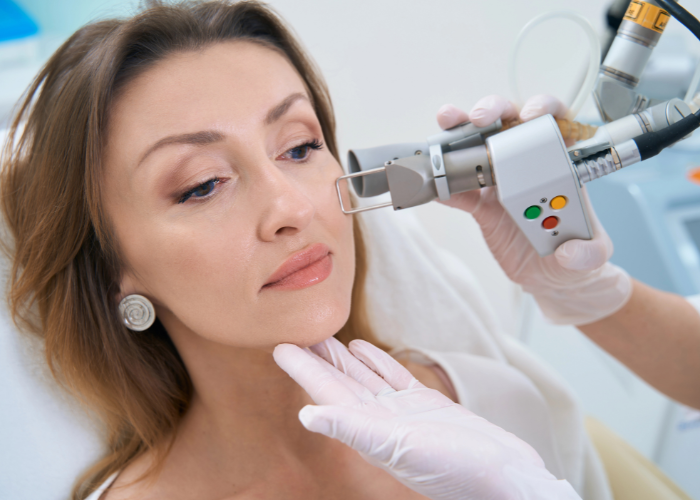
Fractional CO2 laser treatment delivers controlled energy to the skin, creating micro-injuries that stimulate collagen production. As the skin repairs itself, new collagen helps improve firmness and texture. This makes the CO2 laser especially effective for deeper atrophic scars and overall skin renewal.
Patients often choose this treatment because it delivers long-term benefits. Collagen remodeling continues for months, so results improve gradually and naturally. Individuals with moderate to severe scarring tend to see the most meaningful changes. Those seeking more than a surface-level improvement also benefit greatly from this technology.
Also Read: Fractional CO2 Lasers: Can One Treatment Fix Both Acne Scars and Wrinkles?
What Dermal Fillers Do for Acne Scars
Dermal fillers treat acne scars by restoring the lost volume under the skin. When scars pull downward, they create pits or indentations. Fillers lift those areas, giving the skin a smoother and more even appearance. This makes fillers an ideal treatment option for rolling or boxcar scars.
Hyaluronic acid fillers are commonly used because they integrate well with the skin. Collagen-stimulating fillers can also be helpful for individuals who want improvements that continue building over time. Many patients appreciate that fillers offer immediate results. Depending on the product, many also experience gradual improvements as collagen increases.
Why Fractional CO2 Laser and Fillers Work Well Together
These two treatments complement each other because they target different layers of the skin. Fractional CO2 laser focuses on improving texture and encouraging collagen growth from within. Fillers lift scars from the bottom up, restoring smoothness where the skin has collapsed.
When paired strategically, the results tend to last longer and look more refined. Many patients experience an enhanced collagen response with the combination approach. Providers can also tailor treatment to the specific scar types present on each facial area, leading to more personalized, comprehensive improvement.
Also Read: Fractional CO2 Skin Resurfacing: The Ultimate Guide to Laser Skin Rejuvenation
Treatment Order: Laser First, Filler Second
Most experienced providers recommend performing the CO2 laser treatment before placing fillers. The resurfacing process can slightly affect skin volume as collagen reorganizes, so doing the laser first preserves the longevity of the filler and allows more accurate placement afterward.
A typical treatment plan begins with the CO2 laser session. After this, the skin enters a healing stage marked by redness, peeling, and sensitivity. Once the skin has settled, fillers are placed to refine contours and lift remaining depressions. This sequence helps achieve the smoothest and most natural-looking results.
Safety Considerations When Combining CO2 Laser and Fillers
Safety begins with choosing a trained medical provider who understands acne scar patterns and combination protocols. At Castle Dermatology, patients receive individualized assessments to ensure the treatments chosen are appropriate for their skin, health, and goals.
After a CO2 laser session, the skin is temporarily more vulnerable. This means infection prevention and careful aftercare are essential. Providers typically avoid placing fillers immediately after laser treatment to reduce irritation and ensure the skin is ready. Patients should also understand the expected downtime and healing process to avoid stress or unrealistic expectations.
Who Makes a Good Candidate for Combination Treatment
People with mixed scar types often benefit the most from this approach. If someone has both depression and surface irregularities, combining laser resurfacing and fillers can address each issue more effectively. It is also ideal for individuals who have tried single treatments without achieving satisfying results.
Patients seeking a more complete transformation rather than small incremental changes often respond well to this plan. Since the treatments work both immediately and over time, they offer a thoughtful and strategic way to improve skin quality.
What to Expect During Recovery
Recovery involves two phases. After fractional CO2 laser treatment, most patients experience redness, peeling, and sensitivity during the first week. This is normal and temporary. The skin continues to rebuild collagen for months afterward.
Filler recovery is much easier. Some people may notice mild swelling or tenderness, but these symptoms usually fade quickly. Supportive care is essential for optimal healing. Sun protection, gentle skincare, and follow-up visits help ensure the skin recovers properly and the results develop as expected.
When to Consider Additional Sessions
Some acne scars, especially deeper or older ones, may require more than one CO2 laser treatment. Additional sessions help build stronger collagen support and improve skin texture over time. Fillers may also be repeated for maintenance or more dramatic lifting if needed.
A long-term plan often delivers the best overall outcome. Providers at Castle Dermatology guide patients on timing, spacing, and expectations for future treatments to ensure steady, meaningful improvement.
Cost Considerations
The cost of combination treatment varies based on the number of laser sessions required and the amount of filler needed. Fractional CO2 laser typically represents a larger investment because it involves advanced technology and significant provider expertise. Fillers are typically priced per syringe, and the total cost depends on the number of areas to be corrected.
Although combination therapy may seem more expensive initially, it can be more cost-effective in the long run. Repeated single treatments often deliver limited improvement, leading patients to spend more over time for smaller changes. A combination approach targets the structural and surface components of scars at once, leading to better results with fewer repeated procedures.
Patients also save time because they provide better results in fewer appointments. When evaluating cost, it helps to consider both the immediate transformation and the long-term collagen remodeling that continues after treatment. Many individuals find that combining both treatments delivers the greatest value for their investment in skin health.
Best Results Come from a Personalized Treatment Plan
Combining fractional CO2 laser treatment with dermal fillers is one of the most effective ways to improve the appearance of acne scars, as it targets multiple skin layers at once. Patients experience smoother texture, more even contours, and gradual skin firming as collagen builds over time. The most successful outcomes come from a personalized treatment plan created by an experienced medical provider who understands how to sequence and customize these therapies.
To learn more or schedule a consultation, patients can visit Castle Dermatology and explore how expert-guided care can help them achieve smoother, more confident skin.