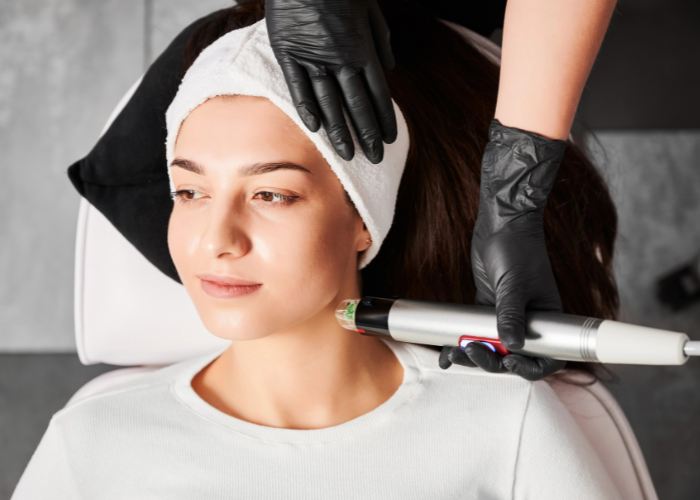
People often begin exploring cosmetic treatments when they notice subtle changes in their skin that prompt them to pause. The texture feels a bit rougher than usual, and early laxity around the jawline becomes noticeable in photos. Or acne scars that were once easy to ignore suddenly stand out more. Because RF microneedling and dermal fillers are among the most popular non-surgical treatments, it’s natural for patients to compare them and wonder which offers the best results for correcting those issues and giving them smoother, firmer skin.
In reality, skin texture, laxity, and volume loss are different concerns that require different approaches. Understanding these differences helps set realistic expectations and makes the decision process much clearer.
Many individuals come to Castle Dermatology for guidance on RF microneedling and fillers to help them achieve their goals. The right choice depends on what is actually happening beneath the surface: changes in texture, tightness, volume, or sometimes a combination of all three.
What Do We Mean by Skin Texture and Skin Tightening?
Skin texture refers to the visible and tactile features of the skin surface. Enlarged pores, fine lines, unevenness, and acne scars all fall into this category. These issues correlate to how collagen breaks down, how the skin heals over time, and how the skin has healed over time.
Skin tightening, however, is about deeper structural support. When collagen and elastin begin to weaken, the skin loses its firmness. This can appear as mild laxity in the lower face or more noticeable sagging when deeper tissues shift. Understanding the difference between texture issues and laxity helps ensure patients choose the approach that targets their main concern.
How RF Microneedling Works
RF microneedling combines tiny controlled micro-injuries with targeted radiofrequency energy. As the needles create microchannels, the RF heat penetrates deeper into the dermis, triggering collagen contraction and encouraging new collagen and elastin production. The process supports the skin’s internal structure, strengthening and refining it over time.
Because collagen remodeling happens gradually, the results develop over the next several weeks. Patients often notice smoother texture, softer lines, and a firmer feel as the skin continues to rebuild from within.
Also Read: Unlock the Secret to Youthful, Radiant Skin With Potenza RF-Microneedling
How Dermal Fillers Work
Dermal fillers work in a different layer of the face and for a different purpose. They restore lost volume beneath the skin, helping lift areas that look hollow or deflated. Fillers shape, contour, and add support to regions such as the cheeks, lips, jawline, temples, and smile lines.
They do not tighten skin or improve texture. Instead, they address volume loss, which is why they are great for facial contour but not for pore size, scarring, or surface irregularities. For patients whose main concern is uneven texture or laxity, fillers are not usually the best first step.
RF Microneedling for Skin Texture Improvement
RF microneedling is particularly effective for patients wanting a smoother texture. It can help reduce acne scars, roughness, enlarged pores, and fine lines by stimulating collagen remodeling at multiple depths. As collagen becomes stronger and more organized, the surface becomes more refined.
Patients dealing with long-standing skin texture irregularities often appreciate that RF microneedling improves the skin from the inside out. This leads to natural-looking changes that continue to develop gradually after each session.
RF Microneedling for Skin Tightening
RF microneedling also provides a tightening effect for patients experiencing mild to moderate laxity. The RF heat causes collagen fibers to contract immediately and stimulates new collagen over time. Most patients notice firmer skin around the cheeks, jawline, and neck as the treatment series progresses.
It is not designed to correct advanced sagging, but it can noticeably improve early laxity. This makes it appealing to people who want subtle tightening without altering their natural features.
Fillers for Skin Tightening: What They Can and Can’t Do
Fillers can sometimes give the impression of tightened skin by lifting certain areas, but they do not create true tightening. They add volume, which can help reshape shadows or restore definition. However, they don’t rebuild collagen or restore elasticity. Using fillers to compensate for significant laxity can lead to heaviness or an unnatural appearance.
Fillers are best suited when the main concern is lost volume, not loose skin or surface texture.
RF Microneedling vs Fillers: Key Differences
RF microneedling targets the skin’s internal structure, improving firmness and texture by stimulating collagen remodeling. Fillers add structure beneath the skin to lift, contour, and restore shape. One focuses on quality. The other focuses on volume.
RF microneedling results develop gradually. Fillers work immediately. Maintenance also varies: RF microneedling often requires a series of treatments and periodic touch-ups, while fillers vary by type and placement.
Knowing these distinctions helps you avoid choosing a treatment that does not align with your goals.
Which Is Better for Texture?
RF microneedling is generally the best choice for texture concerns. It targets pores, fine lines, and acne scars by stimulating deeper collagen formation. Fillers cannot reach the surface or create a smoother texture because they work beneath the skin.
In some cases, both texture issues and volume loss are present. When this happens, combining RF microneedling and fillers can provide a more balanced result.
Which Is Better for Tightening?
RF microneedling is typically more effective for early skin laxity because it strengthens collagen and helps the skin feel firmer. Fillers help contour the face, but cannot meaningfully tighten the skin.
When laxity is more advanced, a different tightening approach may be necessary. A professional consultation is the best way to determine which option is appropriate.
Can RF Microneedling and Fillers Be Combined?
Yes. Many patients benefit from combining RF microneedling with fillers because each addresses a different aspect of aging. RF microneedling improves texture and skin quality, while fillers restore volume and balance facial proportions.
In most cases, RF microneedling is performed first, and fillers are added later once the skin has healed. This approach gives the most natural outcome and avoids placing filler into recently treated areas.
Who Is a Good Candidate for Each Option?
Great candidates for RF microneedling include patients with uneven texture, fine lines, acne scars, or early laxity. Those who want natural-looking improvements without dramatic structural changes often prefer it.
Ideal candidates for fillers are those with volume loss, contour changes, or deeper folds. Fillers work well for restoring fullness and enhancing definition.
Some patients need both treatments. Others need only one. That is why a thorough evaluation helps determine the most effective plan.
Safety, Downtime, and Considerations
RF microneedling usually involves mild redness and swelling for one or two days. Fillers may cause temporary bruising or swelling, depending on the injection area. Both treatments are considered safe when performed by experienced professionals trained in facial anatomy.
Choosing the right treatment also means understanding what your skin needs and setting realistic expectations based on collagen quality, facial structure, and the type of improvement you want to see.
Also Read: The Potenza RF Microneedling Glow-Up: What to Expect From Your First Treatment
What This Means for Patients
RF microneedling and dermal fillers are highly effective treatments, but they serve different purposes. RF microneedling is ideal when improving texture or tightening mild laxity. Fillers are best when restoring lost volume or contouring the face. Many patients see their best results when both treatments are used together in a personalized plan.
If you’re deciding which option best aligns with your goals, booking a consultation with Castle Dermatology in Tarzana can help you understand what your skin needs and which approach will give you the most natural, refreshed, and long-lasting results.