Medical Hair Restoration at Castle Dermatology Institute

Thinning hair can change how you feel when you look in the mirror. For many men and women in the San Fernando Valley, noticing a wider part, a receding hairline, or excessive shedding can be a source of significant stress. While many over-the-counter products promise results, hair loss is a biological process that often requires a medical solution.

At Castle Dermatology Institute, we provide a dermatologist-led approach to hair restoration. PRP for hair loss in Tarzana offers a non-surgical way to address thinning by using the healing properties of your own blood. By focusing on early intervention and medical-grade technology, we help patients in Encino, Woodland Hills, and the surrounding Los Angeles area regain hair density and confidence.

How PRP for Hair Restoration Works

Platelet-Rich Plasma (PRP) is a concentration of platelets derived from your own blood. Platelets are known for their role in wound healing, but they also contain growth factors that can activate dormant hair follicles.

When these growth factors are introduced into the scalp, they work to:

  • Extend the growth phase: Every hair goes through a cycle of growing and resting. PRP helps keep hair in the active growth phase longer.
  • Increase hair thickness: PRP can help miniaturized follicles, those that have become thin and weak, produce thicker, stronger hair shafts.
  • Reduce shedding: By strengthening the follicle’s connection to the blood supply, PRP helps slow down the rate of active hair loss.
  • Improve scalp health: Better blood flow to the scalp creates a healthier environment for hair to thrive.

The Selphyl® PRFM Advantage

At Castle Dermatology Institute, we utilize the Selphyl® Platelet-Rich Fibrin Matrix (PRFM) system. Standard PRP can sometimes dissipate quickly after injection. PRFM converts the PRP into a matrix or a gel-like structure. This helps the growth factors stay in the treated area of the scalp for a longer period, providing more sustained stimulation to the hair follicles.
Are You a Candidate for PRP Hair Treatment?

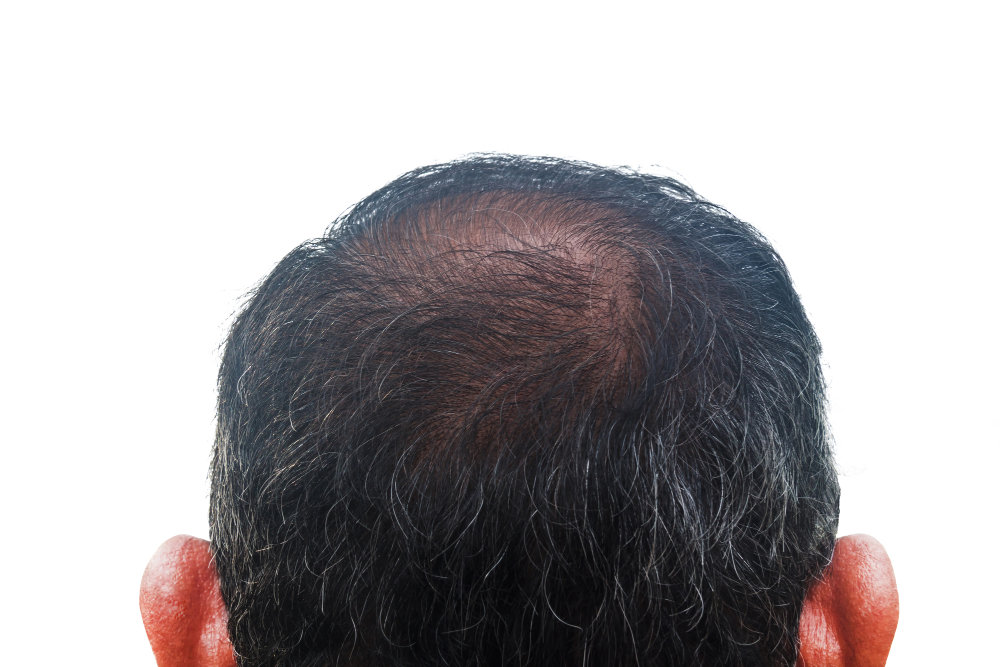
Identifying the right time to start treatment is a major factor in seeing success. PRP is most helpful for patients with functional hair follicles. If an area of the scalp is completely bald and shiny, the follicles may no longer be active enough to respond to stimulation.

Patients with Early Thinning

If you have noticed your ponytail feels thinner or your scalp is becoming more visible under bright lights, you are likely in the window where PRP is most helpful.

Androgenetic Alopecia (Pattern Hair Loss)

This is the most common cause of hair loss in both men and women. In men, it looks like a receding hairline or thinning at the crown. In women, it usually appears as general thinning across the top of the head.

Those Seeking Non-Surgical Solutions

PRP is an excellent choice for patients who are not ready for hair transplant surgery or those who prefer to avoid the daily hassle of topical chemicals or the side effects of certain oral medications.

Post-Pregnancy or Stress-Related Shedding

Women experiencing hair changes after childbirth or periods of high stress (telogen effluvium) often find that PRP helps reset the growth cycle and speed up recovery.

Patients Experiencing Gradual Hair Loss

Hair loss rarely happens overnight. For most people in Tarzana and the surrounding areas, it begins as a gradual hair loss, with hair density slowly decreasing over several years. You might notice that your hair feels lighter when you brush it, or that your scalp is more visible when your hair is wet.

PRP is specifically designed for this type of slow, progressive thinning. By intervening while the hair follicles are still active—even if they are producing thinner strands—we can work to reverse the “miniaturization” process and help those follicles return to a healthier state.

Combination Treatment Candidates

Many of our patients at Castle Dermatology are already using other methods to manage thinning, such as topical minoxidil, oral finasteride, or specialized supplements. These individuals are often the best candidates for combination treatment.

PRP does not replace these treatments; instead, it can complement them. While medications work to block the hormones that cause thinning or provide the body with raw nutrients, PRP provides a direct “boost” of growth factors to the scalp. This multi-angled approach is often more successful than using any single method alone. If you are already on a hair health regimen but feel your results have plateaued, adding PRP may help you reach the next level of hair density.

The Treatment Process at Castle Dermatology

1. Medical Consultation and Scalp Evaluation

Before any needles are touched, we conduct a deep-dive evaluation. Hair loss is often a symptom of internal changes, such as thyroid dysfunction, iron deficiency, or hormonal shifts. Our dermatologists perform a physical exam of the scalp to identify the pattern of thinning and may order blood work to rule out underlying medical causes. This ensures we are treating the root of the problem, not just the symptoms.

2. The Specialized Blood Draw

The process begins with a small blood draw, similar to what you would experience at a standard physical. We take a precise amount of blood into a specialized vacuum tube. Because we use the Selphyl® system, these tubes are designed to keep the platelets healthy and intact during the transition from your arm to the centrifuge.

3. Advanced PRP Preparation

The blood is placed in a high-speed centrifuge. This machine spins the blood to separate it into distinct layers. We specifically isolate the “buffy coat,” which contains the highest concentration of platelets and growth factors, while removing red and white blood cells that can cause unnecessary inflammation or discomfort.

4. The PRFM Conversion (The Fibrin Matrix)

We add a small amount of calcium chloride to the concentrated platelets. This triggers a reaction that converts the liquid PRP into a Platelet-Rich Fibrin Matrix (PRFM).

While standard PRP is a thin liquid that the body absorbs very quickly, PRFM creates a three-dimensional scaffold or “matrix.” This gel-like structure holds growth factors in place at the injection site for a longer period, providing sustained nutrient delivery to hair follicles over several days rather than just a few hours.

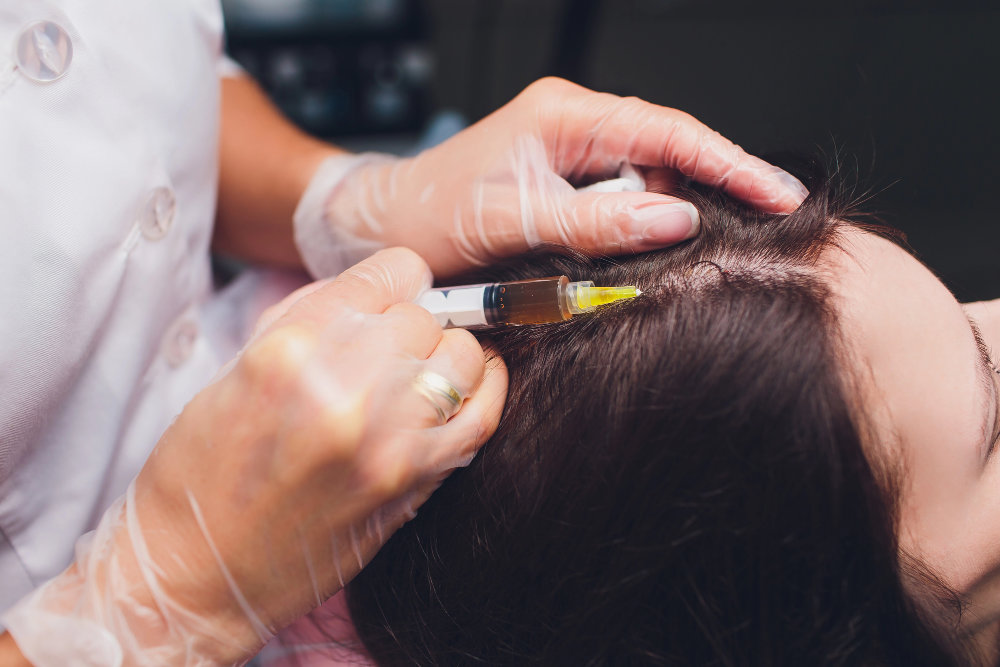
5. Targeted Scalp Injections

Once the PRFM is ready, the dermatologist uses a very fine-gauge needle to perform a series of precise injections across the thinning areas of the scalp. We focus on the “bulge” and “bulb” areas of the hair follicle, the sections responsible for hair regeneration. Because we use specialized techniques and thin needles, most patients find the sensation very manageable, often described as a light pinching.

What Results Can You Expect?

Results from PRP are not overnight, as hair growth is a slow biological process. However, most patients follow a predictable timeline:

  • Months 1–3: Many patients notice a significant decrease in daily hair shedding. Your hair may feel “more anchored.”
  • Months 3–6: You may begin to see improved hair quality. Existing hairs often become darker and thicker, covering the scalp more.
  • Months 6–12: This is when the most visible changes in density occur. Fine “baby hairs” may start to fill in thinning areas.

Maintenance is Key

PRP is not a permanent cure for genetic hair loss. To keep the follicles stimulated, most patients return for a maintenance treatment every 6 to 12 months after their initial round.

Your Personalized Treatment Plan

Initial Series

Most patients start with a series of 3 to 4 treatments, spaced about 4 to 6 weeks apart. This “loading dose” provides the intense stimulation needed to jumpstart the follicles.

Combination Therapy

PRP works well alongside other treatments. Your dermatologist may suggest combining PRP with:

  • Prescription topical solutions
  • Oral hair growth supplements
  • Low-level laser therapy
  • Specific shampoos designed to support scalp health

By attacking hair loss from multiple angles, we increase the likelihood of success.

Recovery and Aftercare

One of the biggest benefits of PRP is that it requires no downtime. Because the treatment uses your own blood, the risk of an allergic reaction or a major side effect is extremely low.

  • Tenderness: You might feel some mild soreness or a tight sensation in the scalp for a day or two.
  • Activity: You can return to work or exercise immediately.
  • Hair Care: We recommend waiting until the next morning to wash your hair, allowing the injection sites to close completely. Avoid harsh chemical treatments like hair dye for about 48 hours.

PRP for Hair Loss FAQs

PRP uses growth factors from your platelets to stimulate blood flow and provide nutrients to the hair follicles. This helps thin hair grow thicker and keeps hair in the growth phase longer.

Men and women in the early stages of thinning hair or those with a hereditary pattern of hair loss usually see the best results. It is also helpful for those who want to avoid surgery.

Most patients begin with a series of 3 or 4 treatments spaced about a month apart. After that, a maintenance treatment is common once or twice a year.

While shedding may slow down within weeks, visible changes in hair thickness and density usually take 3 to 6 months to appear.

It does both. It helps slow active shedding and can “wake up” follicles that have started to thin, leading to new, thicker growth. However, it cannot regrow hair in areas that have been bald for many years.

Yes. PRP is a versatile treatment that works for both male and female pattern hair loss.

Androgenetic alopecia (hereditary thinning) responds best. It can also be used for certain types of stress-induced shedding.

We use very fine needles, and most patients describe the sensation as a series of small pinpricks. We can use cooling techniques to make the process more comfortable.

From the blood draw to the final injection, you can expect to be in the office for about 45 minutes.

No. You can go back to your normal routine, including exercise and work, right after your visit.

Results vary, but most patients enjoy their improved density for several months. Regular maintenance visits help keep the results stable.

Yes, we often recommend combining PRP with medical-grade topicals or supplements for the best possible outcome.

If you have a very low platelet count, active scalp infections, or certain chronic liver or skin diseases, PRP may not be right for you. A consultation will help determine this.

While topical treatments require daily application and medications work systemically through the body, PRP provides a localized, biological boost directly to the follicles using your own growth factors. It is often more powerful than at-home tools because a dermatologist can ensure the PRFM reaches the precise depth of the hair bulb where regeneration occurs.

A dermatologist can diagnose the specific cause of your hair loss. Some hair loss is caused by scarring or autoimmune issues that require different medical treatments. We make sure you are getting the right treatment for your specific diagnosis.

Schedule a Hair Loss Consultation in Tarzana

If you have noticed your hair is not as thick as it used to be, the best time to act is now. Early intervention is the most helpful way to protect your hair density.